SEC Power Factor Penalties: How Saudi Factories Eliminate Them for Good
Saudi Electricity Company tariffs penalize facilities operating below 0.9 power factor. A correctly engineered capacitor bank removes the penalty permanently — and typically pays for itself within 12–24 months.

The Saudi Electricity Company applies a power factor clause to industrial and commercial tariffs: operate below 0.9 power factor and your bill grows — every month, forever, until the underlying reactive power problem is fixed. The fix is neither exotic nor experimental: a correctly sized, correctly protected capacitor bank restores power factor to target and removes the charge permanently. In our project history across the Kingdom, payback on the equipment typically lands between 12 and 24 months, after which the saving is pure margin.
What is power factor, in plant terms?
Motors, transformers and other inductive machines draw two currents at once: the working current that becomes torque and heat, and a magnetising (reactive) current that does no work but must still be delivered. Power factor is the ratio between the two — a plant at 0.75 is forcing the network to carry roughly a third more current than its production requires. The utility sees that as capacity you occupy without paying energy rates for it, so the tariff claws it back.
How do I find the penalty on my SEC bill?
Pull your last twelve invoices and look for three things: the recorded power factor figure, the kVA (apparent power) demand line, and any explicit low-power-factor adjustment. A pattern of penalties peaking in high-production months tells you exactly where correction pays back fastest. If your meter data shows only kWh, request interval data — every serious correction study starts from measured load, not nameplate guesses. This is precisely how our power factor correction service begins: a Class A analyzer on your incomer for a representative week.
What equipment actually fixes it?
| Solution | Best for | Watch out for |
|---|---|---|
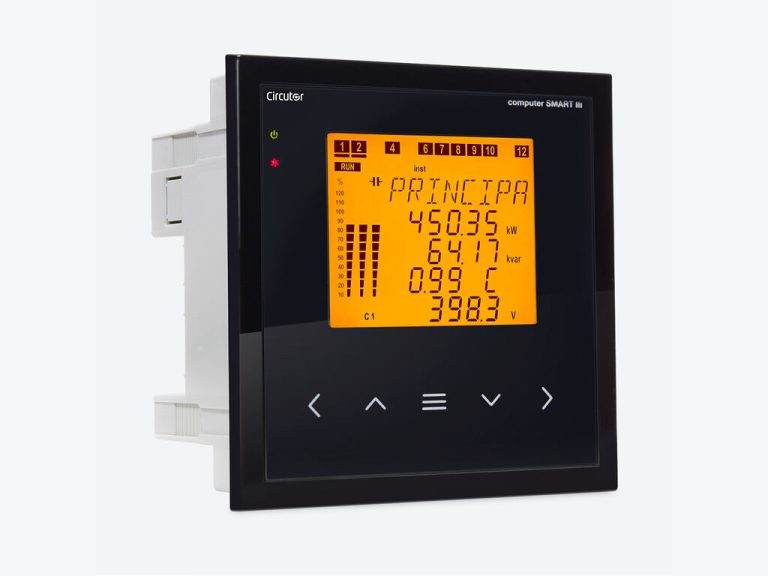
| Fixed / automatic capacitor banks | Steady or step-varying industrial loads | Must be detuned where harmonics are present |
| APFC controllers | Loads that swing through the day | Step sizing — too coarse hunts, too fine costs |
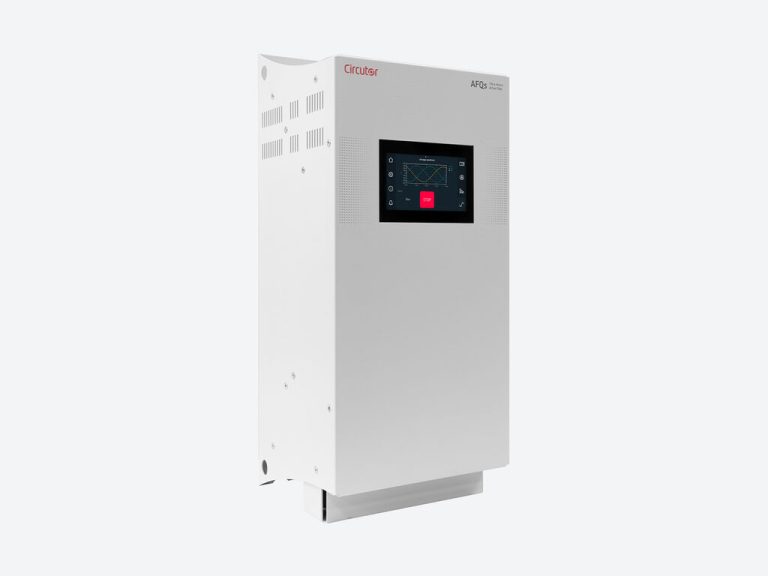
| Static var generators | Fast-changing loads (welders, presses, cranes) | Higher cost per kvar; instant response in return |
| Active harmonic filters | Drive-heavy plants where distortion and PF mix | Solves two problems; size for both |
Why do capacitor banks fail early in some Saudi plants?
Two reasons, both preventable. First, heat: a capacitor rated for 40 °C ambient inside an unventilated enclosure in a Dammam summer is running on borrowed time — specification must match our climate (this is where enclosure cooling earns its cost). Second, harmonics: plain capacitors can resonate with drive-generated distortion and cook themselves within a year. Where VFDs, rectifiers or LED lighting dominate, the bank must be detuned with reactors — or the distortion addressed first (see our guide to harmonic limits and fixes).
The four-step elimination sequence we run
- 1. Measure — a week of interval data at the point of connection: kW, kvar, harmonics, voltage profile.
- 2. Engineer — target 0.95–0.98 at the meter; select technology, steps and detuning from the data; verify against fault levels.
- 3. Install and commission — protection, contactor duty, and controller setup done to IEC 60831 capacitor standards, with the commissioning tests documented.
- 4. Verify on the next invoice — metering stays in place until the bill proves the model. Correction is only finished when SEC’s numbers say so.
A worked example: what correction looks like in numbers
Take a plastics factory drawing a steady 1,000 kW at 0.75 power factor — a profile we see constantly in KSA manufacturing. At 0.75, the apparent power is 1,333 kVA; the network carries 882 kvar of reactive power that does nothing productive. Correcting to 0.97 drops apparent power to about 1,031 kVA — a 23% reduction in the demand figure the tariff prices, and the low-power-factor adjustment disappears entirely. The bank that achieves it needs roughly 630 kvar of switched capacitance; installed with an APFC controller and detuning reactors, the project cost sits well inside the range that the monthly saving repays within the 12–24 month window — and the equipment’s service life is measured in decades when it is specified for our ambient temperatures.
The same arithmetic runs in reverse for undersized or failed banks: a plant whose five-year-old capacitors have quietly lost a third of their capacitance is paying penalties again without anyone noticing. Bank health belongs on the annual maintenance calendar next to the thermal survey.
Common mistakes that turn savings into losses
- Buying kvar by nameplate, not by measurement — motor lists overestimate real reactive demand; oversized banks overshoot into leading power factor at night.
- Ignoring harmonics — plain capacitors in a drive-heavy plant resonate and fail; detuning is cheap at design time and expensive as a retrofit lesson.
- Coarse step sizing — a bank switching in 200 kvar lumps hunts around the target and hammers its contactors; steps should match the plant’s real load swings.
- Skipping the verification bill — commissioning ends when SEC’s invoice shows the penalty gone, not when the cabinet door closes.
- No ownership — assign the bank to someone’s maintenance list; an alarm-silenced APFC controller protects nothing.
How our power factor projects run, start to finish
The engagement starts with your invoices: send the last twelve SEC bills and we model the penalty history and payback for free, before any site visit. If the numbers justify action, a measurement week follows — a Class A analyzer on your incomer capturing kW, kvar and the harmonic spectrum through full production cycles. The engineering package that results specifies the bank, steps, detuning and protection against your measured data and fault levels, with the payback calculation shown transparently: equipment, installation, and the month the saving overtakes the spend. Installation is scheduled into a window you choose; commissioning includes controller programming, step-switching verification and a documented handover. Then comes the step most suppliers skip: we leave verification metering in place until your next SEC invoice arrives, and we review it with you. The project closes when the penalty line reads zero — not when the cabinet is bolted to the wall. After that, an annual bank health check (capacitance, fuses, contactor wear, thermal scan) keeps the correction — and the saving — alive for the equipment’s full service life.
Frequently asked questions
What target power factor should we correct to?
0.95–0.98 at the utility meter. Chasing 1.00 buys almost nothing and risks leading power factor at light load, which some tariffs also penalise.
Can we just switch the bank on and forget it?
No — loads change as production changes. An APFC controller adapts automatically, but an annual health check of steps, fuses and capacitance keeps the payback intact. It folds neatly into a Thermography Electrical Inspections visit.
Does this apply to smaller commercial buildings too?
Yes — the same tariff logic applies to any SEC-metered facility with significant motor or HVAC load. The economics simply scale with the bill.
Volt Solutions engineers, supplies and commissions power factor correction across Saudi Arabia using Circutor reactive-energy equipment we distribute and stand behind. Send us your last twelve SEC invoices and we will model the payback for your site — the review is free and the quotation arrives within one business day.
Osama Khan
Power Systems Engineer at Volt Solutions. Osama leads power quality investigations, ETAP studies and electrical safety audits for industrial facilities across Saudi Arabia — Riyadh, Jeddah, Dammam and the Eastern Province.